Rewilding Software Engineering Chapter 6

Simon Wardley and Tudor Girba have posted the latest chapter to their book, Rewilding Software Engineering, titled "Myths we tell ourselves."

As these posts are on Medium but also licensed under Creative Commons BY-NC-SA 4.0, I turned the chapters into a book that you can download in PDF form. The "code", as it were, is freely available as it's just the Medium posts converted into asciidoc format.

I very much appreciate them writing and publishing the book and I hope this format makes it easier for more people to read.

Welcome to My Post Mid-life Crisis

Three boxes on the floor. A Pioneer DDJ-FLX4, headphones, and a pair of monitor speakers.

Yes, I finally took the plunge and bought some toys that I've been thinking about for much of 2025. I was a radio DJ in college and this is a very different kind of DJ gear...but thinking about how to move from one song to another is quite enjoyable to me and I want to do move of it and do it more like professionals.

Do I plan on making a career out of DJing? No. I can't stay up that late anymore. Do I plan on doing this publically? Eh, if it happens it happens, but it is not the goal. What is the goal? To learn something new and have fun. I'm pretty sure I can do that.

The Gear:

  • Pioneer DDJ-FLX4
  • Eris 3.5TB monitor speakers
  • Sennheiser HD 280 PRO headphones
  • rekordbox (software to control my deck)

This is all "bang for buck" gear, because this is just for fun.

2025 Strava Activity Report

With a little help from Claude Code, here's my breakdown from Strava. Update: Still a few days left so I'll just update these numbers as they come in.

Hikes

Total Miles: 212.6
Total Hikes: 43

Monthly Breakdown

January: 23.2 miles (4 hikes)
February: 15.4 miles (3 hikes)
March: 22.0 miles (5 hikes)
April: 8.4 miles (2 hikes)
May: 16.2 miles (3 hikes)
June: 19.7 miles (4 hikes)
July: 26.4 miles (5 hikes)
August: 18.2 miles (4 hikes)
September: 14.0 miles (3 hikes)
October: 4.8 miles (1 hikes)
November: 13.8 miles (3 hikes)
December: 20.8 miles (4 hikes)

Runs

Total Miles: 1307.8
Total Runs: 184

Monthly Breakdown

January: 123.2 miles (17 runs)
February: 117.7 miles (16 runs)
March: 111.5 miles (15 runs)
April: 110.6 miles (15 runs)
May: 122.3 miles (17 runs)
June: 110.2 miles (16 runs)
July: 133.5 miles (18 runs)
August: 66.8 miles (10 runs)
September: 106.5 miles (16 runs)
October: 45.8 miles (8 runs)
November: 117.2 miles (17 runs)
December: 119.1 miles (16 runs)

Walks

Total Miles: 774.8
Total Walks: 301

Monthly Breakdown

January: 44.8 miles (19 walks)
February: 46.2 miles (21 walks)
March: 57.4 miles (19 walks)
April: 73.3 miles (28 walks)
May: 58.6 miles (19 walks)
June: 68.9 miles (24 walks)
July: 67.7 miles (35 walks)
August: 94.9 miles (38 walks)
September: 56.3 miles (25 walks)
October: 50.1 miles (24 walks)
November: 50.6 miles (21 walks)
December: 70.8 miles (18 walks)

I have started syncing Apple Fitness rowing workouts to Strava, but they don't have any distance information because I have a Concept 2 rowing machine that doesn't talk to anything.

The Forces Working Against UX

Why do we run into situations where a company seems intent on making their systems or people incapable of taking our money for their services which we desire?

I had the good fortune to hang out with Joshua Kerievsky at Øredev 2025. We were on the same flight home, so we made our way to the Copenhagen airport and decided to buy a day pass to the SAS (Scandinavian Airlines System) lounge. We had arrived at the airport the recommended three hours before our flight, so the lounge seemed like a good idea. Well, at the time at least. It quickly turned into a user experience case study of how not to delight a customer.

The first hurdle was the front desk. The associate asked when our flight was and we told her that was at noon. She told us that anything less than three hours isn’t eligible. I held up my app and explained that it was allowing me purchase, but I guess the rules are the rules and she still said she couldn’t help and we were welcome to try the app. Joshua proceeded to navigate the SAS phone app to get to the screen where you could purchase a pass, which was a nontrivial navigation experience, but we got there. He tapped the button and nothing would happen. He tried again. And again. “Maybe it’s because I’m using the app as a guest,” he wondered aloud. He didn’t want to create an account because he doesn’t fly SAS typically, so why bother with yet another username/password (no passkey support) and the inevitable barrage of unwanted marketing emails that we are opted into by default everywhere.

All of this was done standing at the lounge front counter, so we decided to find a place to sit down and see if creating an account would unlock the functionality to give SAS the $55 USD they desired for lounge access. He gets out his laptop and begins the account creation process. We all know the pain of trying to use most web sites on spotty Wi-Fi, and flysas.com was no exception. He gets to the create account page and it’s protected with a CAPTCHA, which would not load. If you can’t solve the CAPTCHA, you can’t create an account. So we wrestle with trying various networks, phone tethering, and finally get it to load. Then the password rules. Then resetting the password because it didn’t save in the password manager. Then messaging the password because device syncing isn’t going great because Wi-Fi. It may shock you to learn that some airport Wi-Fi networks are not great.

Finally he’s in the app, gets to the buried part of the app where you can add lounge access and the price has gone up since we started! They wanted to charge him more money to spend less time in the lounge! We both make our purchases and head in, although it’s certainly not the relaxing experience we had expected.

So what was going on? Why was the app and website so resistant to selling him a lounge pass? The app issue is a pure UX issue. If a user can’t do something because they aren’t logged in, you have to tell them. The website, I suspect, has more to do with a sequence of decisions made in the name of security and fraud prevention that did not take into account the cumulative negative impact on the user. “We have to use a CAPTCHA to thwart the bots!” Did anybody think about introducing that as an external dependency that could have performance issues? Many websites have started using services that will flag suspicious behavior to prevent fraud, which sometimes relies on knowing that a user is suddenly far away from the last usage. Weird! Unless you’re traveling…

I’ve been on the implementation side of this fence and the Internet is a very nasty place. Web application firewalls, bot mitigation, and fraud prevention all introduce friction and you have to be aware how it’s accumulating and impacting your customers.

What about the human who simply refused to sell us access before the time window and could have prevented this whole technology ordeal? That limit is likely to prevent customers from missing their flight due to passport control. The delay through passport control could be made available to customers though, not just as a predefined unchangeable time window that doesn’t seem to be enforced in the app. We see signs like this on roads all the time, telling you how long it’s going to take to get to certain destinations. From the customer perspective, enough information to understand the barrier probably would have been sufficient. Instead, it was just a “I can’t” with no explanation.

Companies, I assume, are not intentionally making suboptimal experiences for their customers.To whoever took each decision, in isolation, they probably made all the sense in the world. “We have to block the bots!” “We have to prevent fraud!” “We can’t let our lounge be the reason why customers missed their flight!” Each decision contributes towards the system drifting away from its original purpose: to serve the customer. We all need to remember that our decisions live in a larger system and that every local safeguard has global consequences, up and downstream.


Cleaning Up The RideHome Archive

I listen to the RideHome podcast every weekday, and some weekends when there are bonus episodes that pique my interest. Around November 24, 2018 I think I started hearing Brian, the host, say things like “I’m sure I’ve talked about this before” and thought to myself that this should be a pretty easy problem to solve. Well, if it’s easy it wasn’t easy for me. But that rarely stops me from trying…

I hacked together some really terrible python to grab the RSS feed, parse it, extract the links, and spit out Markdown. Why Markdown when you already had HTML? I was going to use GitHub Pages and Markdown was the easiest path to that, that I knew of at the time. What I didn’t know was that Markdown was going to become the format of choice for LLMs. Anyways, once I got my hack-a-thon scripts working, I basically just ran them once in a while to update my Markdown files and push everything to GitHub for hosting. It mostly worked most of the time, except when the human making the show notes would change how they did the markup. Silly humans, always ruining everything with their capriciousness.

Now, fast forward to December 8, 2025 and I drop a big “Claude Rework” into the repository. Yes, as regular readers know, I’ve been using Claude Code for my little one-off personal projects. What really helped though was Nick Tune’s claude-skillz. I used the TDD persona and refactored my crappy scripts all the way to the point where I could start asking Claude Code to make new features. What kind of new features? Well, I had always wanted to do some data analysis, but I was always too busy and then…this made it so easy. I made a Wrapped feature for 2025 and then ran it against all the previous data I had gathered.

At work I have a reputation as an “AI Hater”, which if you only want to characterize “AI” as “will replace all humans and reduce human labor dollars to zero”, then yes…that’s accurate. I use Claude, ChatGPT, and Gemini almost every day for something. Sometimes I’m just testing the same question across models. Sometimes I’m having them all independently evaluate something I’ve written, always with the prompt that the model is my intended audience and to ask me questions about what I’ve written to help me find the gaps I’ve left or where I was unclear. Seriously, they’re really good at this…if you can ignore the sycophancy.

So what? Now I have some python that’s less sucky than when I started…big deal. Well, sure…but for me it’s more about finding where the actual value can be derived. Is it worth it to back the systems that are actively trying to replace me and the ridiculous race to turn the planet into either energy plants or data centers to consume that energy? Ask again later, hopefully we and the planet are around long enough for that. Right now, for me…my little project is in a much better state and I can do things that I probably wouldn’t have done on my own. Maybe that’s enough.

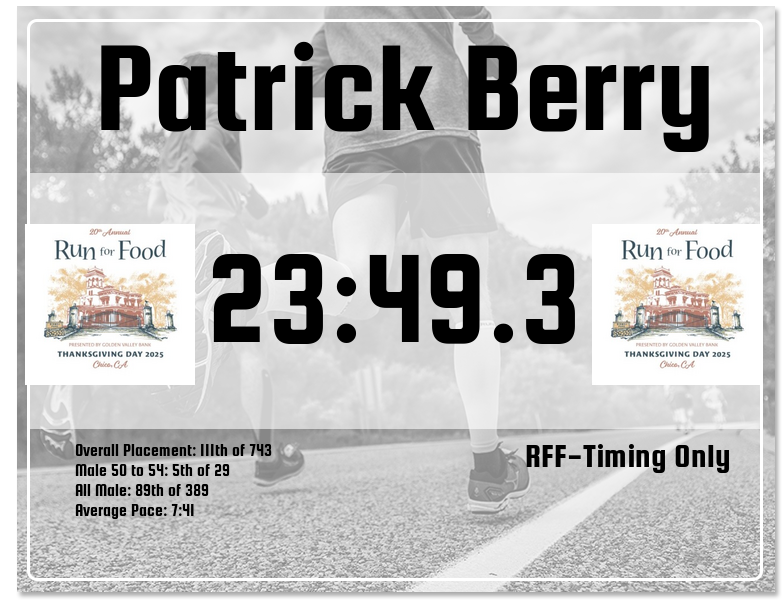
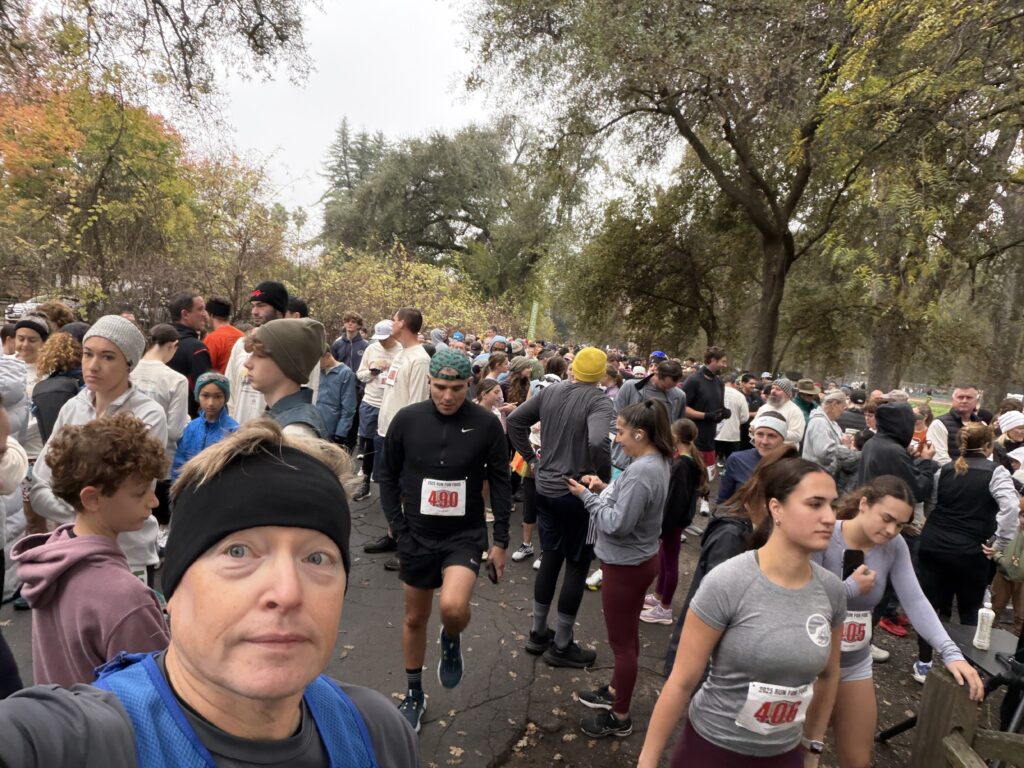
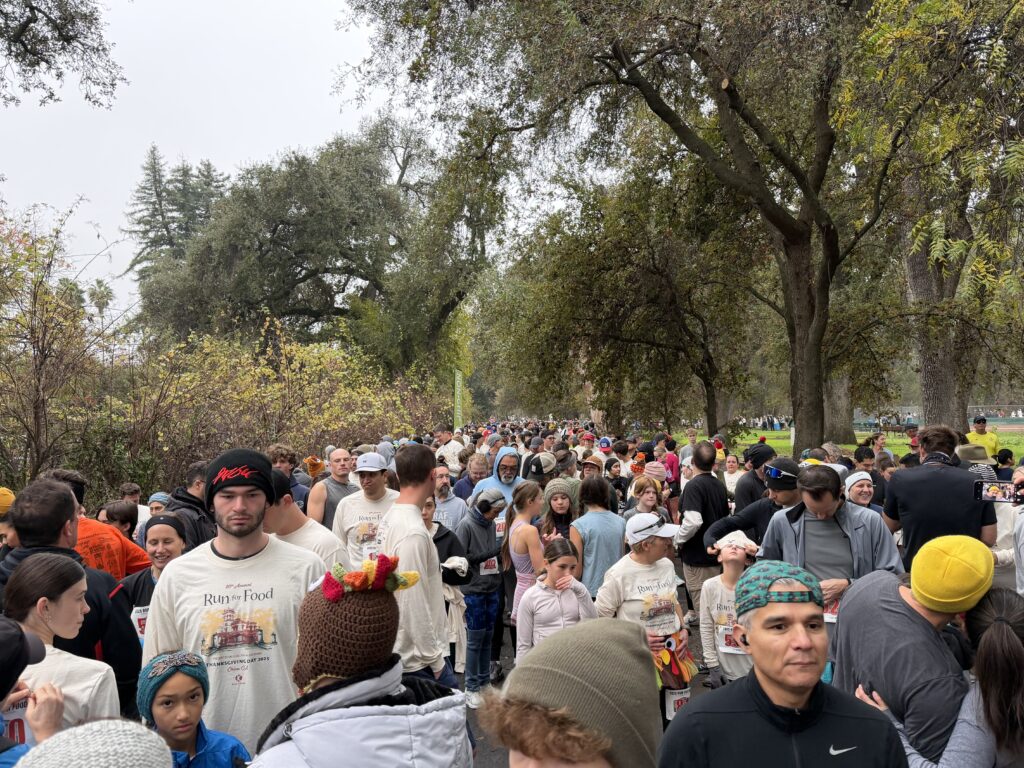
Run for Food 2025

It's that time of year again, specifically Thanksgiving, where thousands of people head out into the wild to trot after turkeys. Or trot as turkeys. Look, somehow there are turkeys involved.

https://runsignup.com/Race/Results/121821/IndividualResult/RJYcX?resultSetId=609480#U114478625

MLS Soccer 2026 Schedule Shenanigans

The 2026 MLS Schedule has been released! That's the good news. If you want to see the entire season, it seems like you have to go to a team and then view the entire schedule from there. That's fine, but I wanted it in a Google Sheet, so I had Claude work on a solution.

I present to you the mls-schedule-generator. Is it "vibe coded"? Yeah, mostly. Is this good code? Probably not. Does it work? Yeah. You can see the results in this sheet.

AI is Biased and Doesn’t Share Your Values

I guess if the crypto traders say it, it’s real?

“It’s hard to say how much we can take away from this,” Azhang said. “One thing that we do know is that there are patterns in the models and they’re clearly biased and have preferences.

“For example, Claude almost always goes long and refuses to go short. It’s like an eternal optimist whereas Gemini is happy to short,” Azhang said. “They clearly have these inductive biases when it comes to trading.”

Simon Wardley on LinkedIn:

GPTs are a non kinetic form of warfare designed to embed the values of a small number of people into much wider communities by capturing the process of decision making. The delivery mechanism is the appearance of helpfulness i.e. coherent and authoritative arguments. The payload is helplessness and the creation of a new theocracy.

Simon Wardley on Medium:

By controlling the tools available to an individual, one can shape the type and quality of information they access. For example, limiting access to specific scientific instruments or technologies can constrain a person’s ability to gather empirical evidence and engage in scientific reasoning. Conversely, providing access to biased or misleading tools can lead individuals to draw erroneous conclusions or develop skewed perspectives about the world.

Simon Wardley on LinkedIn:

Do remember, LLMs are a non kinetic form of warfare. By controlling the language, medium and tools then they influence how you reason about any space. If the hypothesis holds then over time, your values and hence your behaviour will become altered by your exposure. This is no different to how we have used art to change societies.

Micorsoft’s AI chief Mustafa Suleyman in the Wall Street Journal (Apple News link)

AI “is going to become more humanlike, but it won’t have the property of experiencing suffering or pain itself, and therefore we shouldn’t over-empathize with it,” Suleyman said in an interview. “We want to create types of systems that are aligned to human values by default. That means they are not designed to exceed and escape human control.”

Which human values to do you think he means?

Posted in AI